What is Passcovery's licensing policy, and what do you get for your license?
A Passcovery license works as an annual subscription. You pay once for the year and get the program itself, every update, and tech support. When the year ends, the software keeps working on the same computer. You only pay again for new versions, or to re-activate the program if your PC's Hardware ID changes down the road.
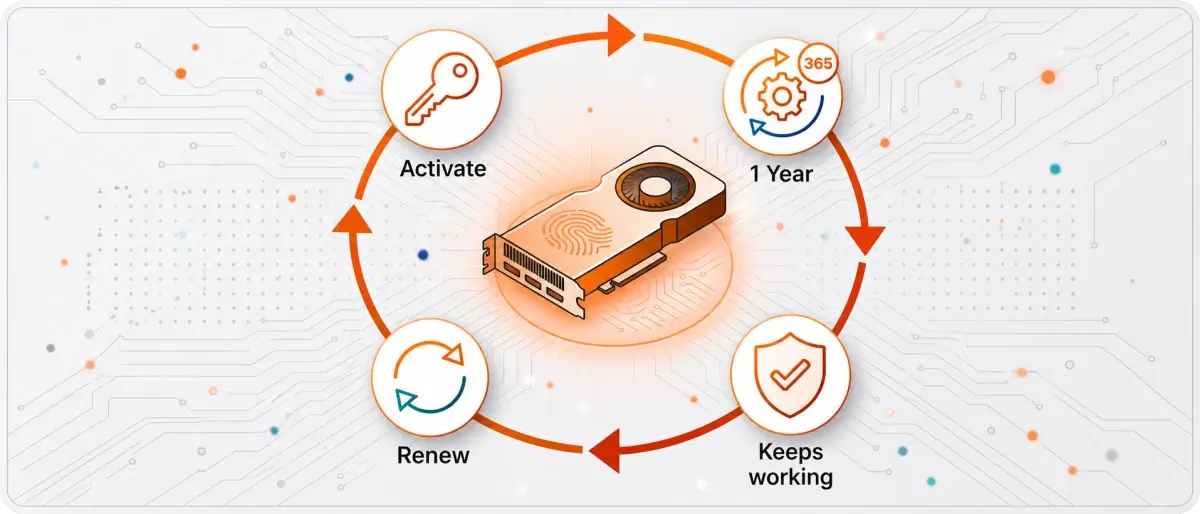
Here's the rundown: what's included in a license, how the annual subscription works, what renewal costs, and how refunds work. No legal fog, just plain English.
What's included in a license
A Passcovery license gets you three things:
- The full program, with no trial limits: it recovers passwords for the formats each product is built for.
- A year of updates: new versions and support for new hardware while your subscription is active.
- Priority support: we answer everyone, but license holders go to the front of the line.
The free Trial is always available too, so you can test the program before you buy.
The annual subscription: how it works
For the full year you've paid for, you get updates and support. When the year ends, the program doesn't shut off: the activated version keeps running on the same computer. Only updates and support pause, and they come back the moment you renew.
Now about the lock. A license is tied to your Hardware ID (HWID), a kind of fingerprint of your computer. The HWID is built from many system parameters, so it can change for more reasons than swapping a graphics card or reinstalling Windows. If your subscription is active, just re-activate the program yourself, the same way you did after buying. But once a year has passed since your first activation, re-activation won't go through, and you'll need to renew the license.
If you need to activate without an internet connection, see the guide on offline activation.
Renewing a license: price and timing
Renewal costs 30% of your license's base price and extends it for another year. You get new versions again, support, and the ability to re-activate the program when your hardware changes.
In plain terms
You can put a license to sleep and wake it up years later. Buy it, use it, set it aside: the subscription hibernates like a bear in winter. The program just sits on your drive the whole time and never asks for a dime. Need it again in a couple of years? Wake it up by renewing at a discount, with no penalty for the long nap. You only pay for the years you actually work.
Passcovery's five license types
There are five license types: Trial, Basic, Standard, Professional, and Ultimate. They differ in how many graphics cards they use, and in the simpler products, in whether the license is for home or for work.
| License type | Compute modules | Who it's for | Usage |
|---|---|---|---|
| Trial | CPU and one GPU device | anyone | evaluation, free |
| Basic | CPU only | individuals only | non-commercial |
| Standard | CPU and one GPU module | individuals and businesses | commercial and non-commercial |
| Professional | CPU and two GPU modules | individuals and businesses | commercial and non-commercial |
| Ultimate | CPU and more than two GPU modules | individuals and businesses | commercial and non-commercial |
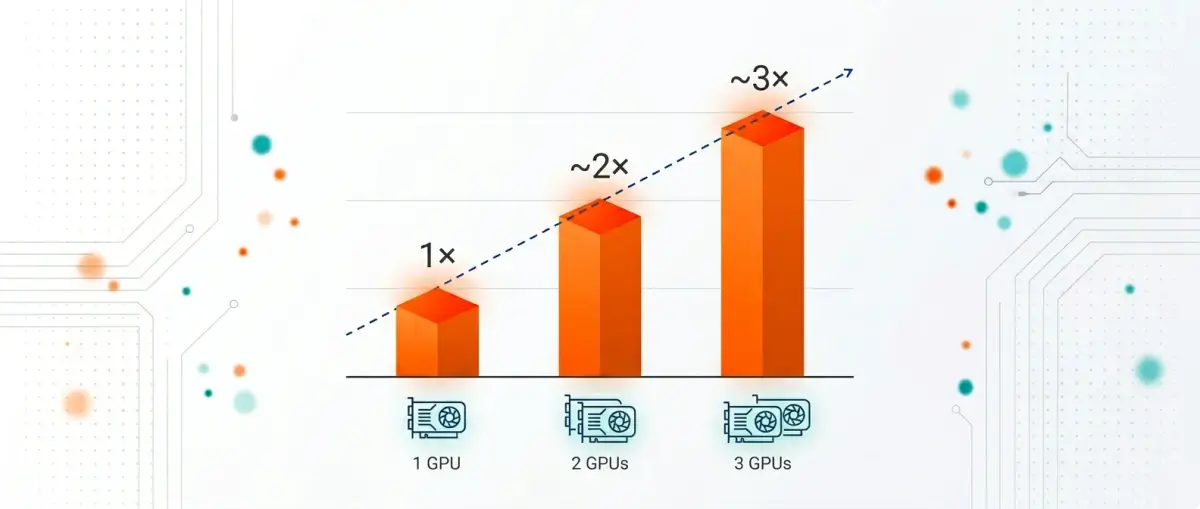
Here's the key thing about speed: on a single graphics card it's the same across every license, including the free Trial. That's why the Trial shows you the real speed on your own hardware before you buy. The paid licenses differ elsewhere: they use more cards, and the speed gain is close to linear. Two cards run about twice as fast as one, and three cards about three times. That's how parallel GPU computing works: the job splits into independent chunks, one per card.
Ready to choose? Pick the license that fits your product and graphics cards.
A professional tool at an accessible price
Passcovery is still a professional GPU tool, just one that's within everyone's reach. It doesn't need expensive special-purpose hardware or a big lab budget: it runs on the ordinary GeForce, Radeon, and Intel Arc cards already sitting in your computer, and squeezes more out of them. So individuals and companies alike pick it up without a second thought.
Can you get a refund if the program didn't help?
There's no unconditional refund after activation. You test the program for free in the Trial on your own file first, so buying stays a deliberate choice, not a gamble. If the activated program fails through a fault on our end, we review your request within 7 days and either fix the problem or refund your money. The full terms are in the license agreement.
Expert tip. Denis Gladysh, Head of Passcovery:
Don't buy blind. Download the free Trial and put it through its paces. Run a recovery on the actual file, play with the range and the mask, and best of all, create a test file with a password you already know and confirm the program finds it. You'll see the real speed on your own card and get a feel for how it works. We strongly recommend testing the program before you buy a license.
Is recovering passwords legal?
Yes, as long as you're recovering access to your own data. That covers your own files, corporate tasks when you have the authority, and forensic work within the law. Accessing someone else's data without permission is off-limits.
If you're ready, get a license. If you're on the fence, start with the free Trial and test the program on your own file.

Author: Denis Gladysh,
Co-owner and Head of Passcovery. Passcovery is a provider of high-speed
GPU-accelerated software solutions for recovering passwords for popular file formats. Denis is the author of the first versions of
Accent OFFICE Password Recovery, created in 1999.


